Pawel Pawlikoski is such an engaging filmmaker partially due to his ability to generate such tenderness and resonance through otherwise subdued stories. Fatherland, the third film of his in a row to be set in the immediate aftermath of the Second World War, is both an interpersonal and a national exploration of trauma and healing. Its gorgeous visuals and sombre direction are matched only by the thought provoking material in exploration.
Technically a biopic, albeit a minimal one that only adapts a portion of a life, the film takes German writer Thomas Mann (Hanns Zischler) as its subject matter. It is 1949 and although he has been in exile for years during and after the Nazi control of Germany, he is about to return to Frankfurt and receive the Goethe Prize in literature. Accompanying him is his daughter Erika (Sandra Huller), an actress and writer who is first seen talking on the phone to her brother Klaus (August Diehl), also a writer. But where Thomas is successful and stoic, Klaus is dissatisfied with his writing and clearly struggles with his mental health. Erika attempts to invite Klaus along, but to little avail.
Straight away the thorny dynamic between father and daughter stands out on screen. As the pair travel from their exile in America and through West Germany, Thomas and Erika frequently converse about their familial ties and what the latest award means to Thomas. It’s an uneasy dynamic, but Huller and Zischler capture a magnetic chemistry that makes their otherwise tense match unusually alluring. The history between these two comes out in droves, clashing in the open even as they remain cordial with one another. It’s a compelling choice to set such a complex relationship in the foreground of an equally complex setting – Germany in the immediate aftermath of WWII – but such is Pawlikowski’s way with thematic and historical resonance.
Complicating this visit are a number of factors, both familial and transnational. Mann’s fleeing of Nazi Germany has him rendered as a traitor by a fringe selection of Germans, who believe he turned his back on the fatherland. But Mann is not concerned with this. In fact, he seems to be not all that concerned with much, coming across as apathetic to Erika. But when news of Klaus’s suicide reaches him and Erika, their relationship begins to unravel as the tribulations of art, politics and family all collide slowly but surely. Just as the German people struggle to wrestle with the cost of the war, and how the horrifying revelations concerning the rise of fascism and the Holocaust have affected their image, Mann and Erika reconcile with his career thus far, and how his fame has shaped his relationships with his children, and even his own trauma.
Borders are subject to scrutiny throughout this film. In a particularly impassioned scene, Thomas decrees that art isn’t constrained by the geographical markings that divides one country from another – a potent choice of words given that Germany was two different countries at this point, and was once a fragmented collection of states, kingdoms and principalities before 1871’s unification. His words ring true, but trauma also knows no boundaries. Whatever side of the war one was on, no one came away from WWII unscathed and the ramifications of its end are still felt to this day. Mann sees communism and fascism as two sides of the same extremist coin. Whether or not that’s true is a debate for another article, but his approach to art highlights the value of solidarity and openness between people – a philosophy that he, ironically, fails to apply to his own children. It’s but one of many contradictions that makes Mann so interesting, and gives the thematic principles of the story an emotional undercurrent to latch onto.
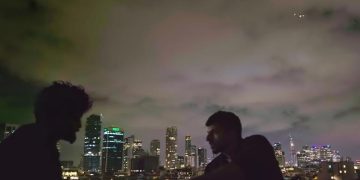
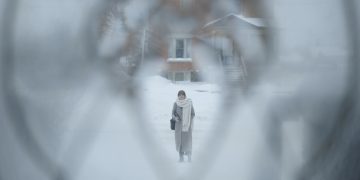
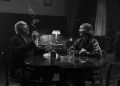
Black and white cinematography courtesy of long time collaborator Lukasz Zal, a stable visual look for Pawlikowski’s past three films, invokes the idea of memory and captures the palpable bleakness underneath the seeming mundanity of the Manns’ trip. Like his previous efforts – Ida and Cold War – Pawlikowski both highlights how firmly in the past this 20th century European story is, and underscores how the emotions felt from the premise are as important today as they were then. The photography born from his and Zal’s combined efforts creates devastatingly beautiful imagery. The gothic setpieces and disquieting tranquility of a setting that, not long ago, was privy to such horrors, leap off the screen, becoming hypnotic to the eye.
Identity might be the primary concern on the picture’s mind. Mann’s identity as a renowned writer seems so astute – and possibly explains why his children attempt to follow in literary pursuits – but even this appears to be challenged by his turbulent relationship with his kids, something Klaus’s death only further highlights. In the aftermath of such grief, be it within the family or of a nation after it committed atrocities, how one is able to move on or reshape their own image of themselves is a daunting question. This forms the crux of the film’s narrative, informing the characterisations, and enhancing the themes, setting and imagery, from its quietly tense opening to its melancholic closing scene.
The muted nature of the drama will be a point of contention for those unfamiliar to Pawlikowski’s style. Much of its substance is read between the lines, which makes for gorgeous visuals and a stirring atmosphere, but may test the patience of those used to more lively pictures. At 82 minutes, the film has a similar runtime to Pawlikowski’s past two historical dramas. Yet, where Cold War feels densely packed and concise at its runtime, Fatherland feels as though it could have benefitted from being a few minutes longer. The somewhat messy conclusion is warranted, but a bit more time in these characters’ company could have amplified the rich thematic observations even further.
Fatherland is as poignant as it is beautiful. Dazzlingly atmospheric imagery and two richly subdued performances give this historical exploration of identity and trauma a visceral potency. While this critic feels that Cold War is still the best of this loose trilogy, Fatherland rounds it off with the same compassion and thoughtfulness that makes Pawlikowski such a powerhouse filmmaker. Whatever he ends up doing next, this critic will be firmly seated in anticipation.
Fatherland is in cinemas now
Rating: 

Director: Pawel Pawlikowski
Writers: Pawel Pawlikowski and Hendrik Handloegten
Stars: Sandra Huller, Hanns Zischler, August Diehl
Country: Poland
Runtime: 82 minutes