“Now the reason the enlightened prince and the wise general conquer the enemy whenever they move and their achievements surpass those of ordinary men is foreknowledge” – Sun Tzu, The Art of War
One day shortly after World War II, Winston Churchill was asked, “If we had broken the Nazis’ code, why didn’t the war end sooner.” The great man replied, “It did.”
Military experts argue the relative merits of blunt force and technology as opposed to intelligence but, in any case, it has been estimated that the world was spared two years of savagery and the possible slaughter of fourteen million souls by the work of Turning and his little band of puzzle solvers.
Moreover, their efforts ushered in the birth of computer science.
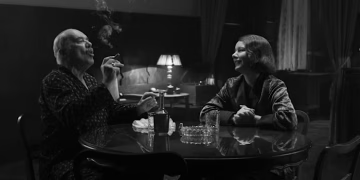
Benedict Cumberbatch owns this movie. Of course, no one portrays the eccentric genius with more authenticity. It used to be sacrilege for anyone but Basil Rathbone to play Sherlock Holmes until Mr. Cumberbatch, omitting pipe and cocaine, stepped in. But in The Imitation Game, he calls and raises, a master of the game, dominating the card table populated with tourists who gladly ante up just to watch his artistry. This isn’t meant to disparage the supporting cast; it’s just that they are starring into the sun. Cumberbatch is awesome. He transforms his character again and again as the almost unbearable drama of the word crisis, and his own personal crisis, demand. His was a short life. Personal and social demons claimed him much too early. To quote Churchill yet again, “Never have so many owed so much to so few.” Well, in this case, never have so many owed so much to one. Mr. Turning may have saved more lives than any other single human being who ever lived.
The Germans had been able to communicate their plans, tactical and strategic, with supreme confidence in the secrecy afforded them by Enigma, the machine which created havoc for the allies. Russia was not yet in the war. The United States was assisting Great Britain with supplies but the U-Boat wolf packs prowled the Atlantic, sinking convoys of desperately needed food and other essentials almost at will. In hindsight, the allied victory seems inevitable. At the time, the only inevitability was death on a massive scale.
The best code breakers in England scrambled to extract some crumb of information from the coded transmissions of the Nazis, only to be crushed by the tolling of the midnight bell, announcing their failure as the code changed for the following day. That was the torment – a new intellectual battle to fight every day. The island was being pummelled from the sky. Their lifeline of supplies destroyed at sea. Victory was not at hand. Churchill must have had nightmares of the coming invasion and the horror of civilian and soldier fighting side by side against the invading hoard.
Most of the story transpires in two work rooms in a government top secret facility. One is furnish with tables on which code breaker feverishly scribble fragments of messages. The other is the womb of the brainchild of Turing, a kind of new life form like the cosmic child in 2001. It’s name is Christopher. Later generations will call it a”computer”. In these two rooms several angry men and one woman live, conspire, suffer, dream and, most of all, think. Their task is to save the world. It’s not fiction. They lived.
And if the project succeeded? When could it be used without tipping off the enemy that the code was broken? How many lives would have to be sacrificed to keep that breakthrough a secret? And who would play God and have to live with that decision?
The will of the English people appeared indomitable, but only the great Churchill stood between the populace and inevitable despair, along with the brave airman and soldiers who sacrificed everything for another day of hope. And Alan Turing. His inspiration was to change the strategy, to pit machine against machine, meanwhile keeping the bureaucrats at bay and the plots and intrigues from undermining it all. Against all odds, he must invent a machine that would out-think Enigma. Only a fool would have imagined it possible.
Director:Morten Tyldum
Writers:Andrew Hodges (book), Graham Moore (screenplay)
Stars:Benedict Cumberbatch, Keira Knightley, Matthew Goode
Runtime: 114 min
Country: UK, USA
Film Rating: