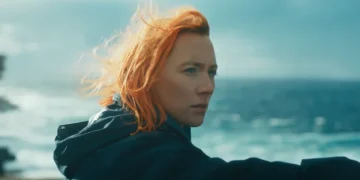
With the impending release of Arriety later this month, we here at Flickfeast are taking a little time out to celebrate the work of this much cherished studio. Each new Ghibli release is shrouded by a mist of childlike excitement and a palpable level of anticipation from both young and old alike. Yet, unlike all those dissatisfying Christmas’s of your childhood, these enchanting films very rarely manage to disappoint.
Lazily described by many as the Disney of Japan, Ghibli films can now be found in almost any entertainment store on the high street and are readily available online. Spirited Away undoubtedly forced Ghibli into the consciousness of a wider audience, but heralding it as a ‘breakthrough hit’ would be a disservice to both this wonderfully magical film and the studio which created it. Indeed, Ghibli has a dedicated following who have been enjoying their enthrallingly immersive output throughout the 26 years the studio has been running. Fingers crossed then that the imminent retirement of Hayao Miyazaki doesn’t stifle the studios creativity and we can continue to bask in the delightful world of Ghibli for many years to come.
10. Ponyo (2010)

Ponyo is one of Miyazaki’s cutest and most intimate films so far, on a par with Totoro and Kiki’s Delivery Service thanks to the engaging matter-of-factness with which it marries the extravagantly fantastic with the comforting realities of childhood. The sight of the giddy and newly childlike Ponyo racing atop the waves of a magically roiling flood of water fish may well be one of the happiest images you’ll ever see in a movie.
9. Laputa: Castle in the Sky (1986)

Winner of the Animage Anime grand prix in 1985, Laputa begins with a bizarre encounter between a young boy and a mysterious floating girl, who by the looks of it has simply fallen from the sky! She’s being chased by a host of pirates and ill-wishers and takes the young boy with her on a high flying, fantastical adventure to discover her true identity – a journey that leads them both to the magical floating castle of a now lost civilization.
Set against a Victorian inspired backdrop, Laputa shows more than a loving nod-of-the-hat to the literary works of authors such as Jules Vern. Full of magic and mystery the film’s a wonderful mix of Japanese storytelling imbued with classic literature, culminating in a subtly charming tale that’s hard to ignore.
8. Kiki’s Delivery Service (1989)

Based a novel by Eiko Kadono, this was the first collaboration between Disney and Ghibli.
Kiki is a thirteen year old trainee Witch, leaving home for the first time in order to complete her occult training. Joined by her talking cat Jiji, the two of them fly off on Kiki’s broom and it doesn’t take long before they find a place to call home. Kiki soon finds a job working for a local baker where she successfully combines her enchanting ability to fly with the delivery requirements of the stores loyal patrons – resulting in a myriad of exciting mini adventures.
The film is a joyfully crafted coming of age drama which covers a wide range of adolescent issues, including themes of loneliness and maturity. Like ‘Sabrina the teenage witch’ but with more heart, Kiki’s Delivery Service’s rite of passage journey is certainly more than initially meets the eye.
7. Nausicaa of the Valley of the Wind (1984)

Technically released before the formation of Studio Ghibli, Nausicaa still sits proudly amongst the company’s vast list of cinematic achievements.
Set a thousand years after the fictional “Seven days of fire” (an event which devastated human civilization and destroyed most of the planets eco-structure) the films central character is Nausicaa, a peaceful warrior who must try to understand this toxic dystopian world so that he can adjust accordingly, in an attempt to save it.
Made in1984 it was one of the first animation films to tackle issues of environmental importance (6 years before Captain Planet!) touching upon global warming, an issue which Ghibli has continued to address throughout its rich history.
6. My Neighbor Totoro (1988)

Originally released as an accompanying piece for Takahata’s Grave of the Fireflies, Totoro is now renowned for being the studio’s insignia as well as one of Japanese cultures most famous and recognisable icons.
The film follows two young sisters and their interactions with the local forest spirits that live near the post-war rural house they’ve moved to so they can be closer to the hospital their sick mother currently resides in.
The film is a visually handsome and charming example of the blissful imaginative nature of children. Unlike other Ghibli works it doesn’t focus around any central themes or issues, leading some to believe it lacks any of the tension and conflict of Miyazaki’s other work but if you take it for the beautifully crafted childhood tale it is then you’ll be rewarded with a wonderfully joyous viewing experience.
5. Howl’s Moving Castle (2004)

A much darker piece than the studio’s previous efforts, Howl’s Moving Castle deals with issues of love and identity amongst a world torn apart by conflict. We follow Sophie a young girl working in a hat maker’s shop who one day becomes cursed with an aging spell by a disgruntled customer. A series of events leads her to Howl, a handsome, yet vain wizard who she joins aboard his fantastical moving Castle. Sophie quickly finds herself immersed in a world of magic and witchcraft with an ever-present atmosphere of fear overshadowing events.
Despite being one of the studio’s most adult-centric films, Howl’s Moving Castle still manages to retain the Ghibli flair for creating charming peripheral characters that dilute any lingering anxiety. Calcifer the talking fire and Turnip Head the mute scarecrow both manage to distract from the undeniable darkness that lies at the film’s heart – like a visual manifestation of a comforting cushion held tightly to your chest.
4. Pom Poko (1994)

Pom Poko is the story of a highly sociable community of racoonish type creatures called Tanuki. The Tanuki originate from Japanese folklore and use ‘illusion science’ to transform into pretty much anything they like, however, their gluttonous nature and lethargic disposition makes them more of a pesky annoyance than any kind of threat.
Pom Poko struggled to find distribution on this side of the world, not because of its inherent Eastern style humour or focus on Japanese mythology but rather the more striking issue of testicles!
Proudly descending from these furry creatures and plain for all to see, prominent testicles are an integral part of Tanuki tradition and are constantly referred to (and shown) throughout the film. The English language version however, in a very reserved, twee, middle class attempt to distract western audiences from this obvious overzealous display of genitalia refers to them as pouches! This obvious denial makes this Japanese version of The Animals of Farthing word appear far more depraved than it actually is, with there being far more similarities with Burt and the Racoons than Beavis and Buthead.
3. Spirited Away (2001)

The film that pushed Ghibli into the forefront of western cinema and helped change how audiences perceive animation.
Chihiro, the films central character becomes trapped in a forbidden world of gods, ghosts and magic. When her parents are taken hostage and turned into pigs Chihiro finds she’s alone and in order to survive must work or else vanish into nothingness. Taking a job within a bath house she discovers she’ll have to find the courage and resolve inside herself if she is to save her enslaved parents and escape back to the human world.
Miyazaki’s previous flare for creating magical worlds and his preference for strong, young female protagonists combine here to form his most famous film so far. Issues of identity, adolescence and loneliness are all perfectly conveyed in this pioneering piece of animation which simultaneously delighted audiences both young and old.
2. Grave of the Fireflies (1988)

American film critic Robert Ebert described Grave of the Fireflies as the most powerful anti-war film ever made, whilst animation historian Ernest Rister compared it with Schindler’s List. It’s certainly not often that an animated feature gets referred to in the same breath as such modern classics but Grave of the Fireflies with its adolescent depiction of conflict is by far one of the most touching and harrowing films to materialize about the Second World War.
Set towards the end of the conflict between Japan and America, we follow a young boy and his even younger sister as they struggle to survive whilst all around them is crumbling. This is one of the few animated films that is universally regarded as a deeply emotional and immersive piece. If its tortured tale of paternal loss and sibling dependency doesn’t bring a tear to your eyes, then you seriously need to consider your capability to experience real human emotions – a truly heart breaking film.
1. Princess Mononoke (1997)

This epic drama is set in a magical world where men, creatures and gods all co-exist but are currently at odds with each other, with the genuine fear of full blown war visible on the horizon. However, the true victim of this endless conflict is the forest and the spirits that dwell within it. Following Ashitaka, a villager, who when cursed with a deadly, parasitic disease caught whilst defeating an evil forest spirit, is banished from the village he calls home. With nothing left to lose he takes it upon himself to discover why this creature which invaded his rural parish became so overcome by evil.
His journey reveals a world where men are hungry for iron and industry has corrupted the will of the people. So severe is this lust for commerce that the surrounding forests are being sacrificed, with little concern for ecological damage being produced.
Princess Mononoke wonderfully presents the future problems of globalization and its environmental effects. However, the blanket of fantasy which surrounds these themes prevents the film from every becoming preachy, instead, showing both sides of the story and illuminating why it’s just not a simple matter of stopping the rise of industry but how a compromise must be made. Its impartial message is conveyed beautifully and only adds to what is an otherwise action packed film which transcends all the stigmas which surround animation, becoming a necessary piece of film and dare I say it…. a classic!