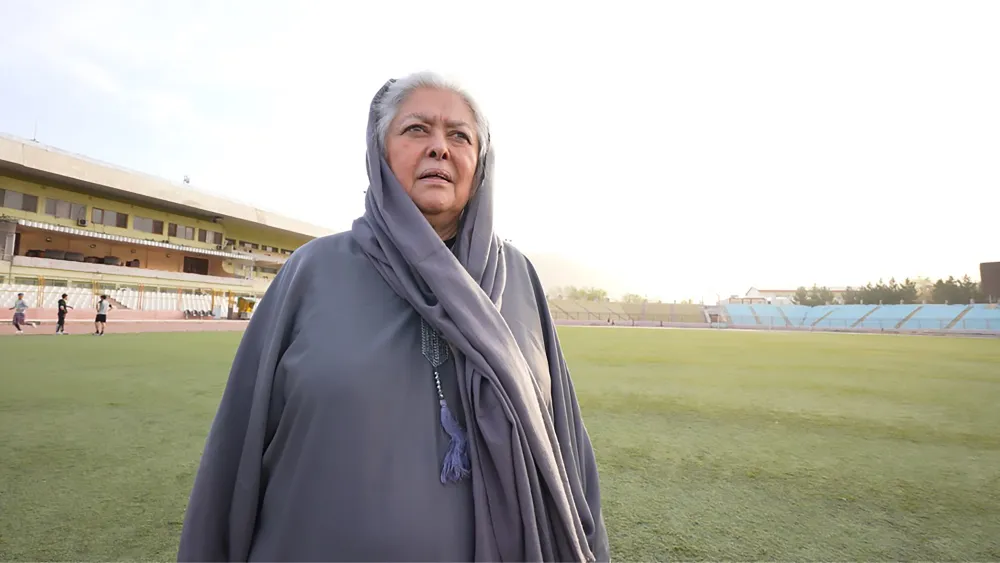
The Nobel Guardian is an astonishing short documentary as vocal as it is resolute in its beliefs. The title refers to Mahbouba Seraj, an Afghan Journalist and Women’s Rights Activist. In particular she is an advocate for women’s education. A longer documentary may have explored her life as a whole, yet what this short doc does is arguably more impactful. Rather it takes the grave seriousness of the Taliban’s takeover of Afghanistan in 2021 and documents Seraj’s response to it. Through a visual showcasing of her activism in the face of fresh oppression, the documentary powerfully demonstrates the resolve, guilt and drive that one person can have in the face of overwhelming odds.
Many of us remember where we were when the Taliban reclaimed governmental powers in 2021, following America’s disastrous exiting of Afghanistan, which itself followed twenty years of questionable occupation. Seraj angrily laments the fault of the Americans in Afghanistan’s current predicament, rightfully declaring that they didn’t consider the consequences of their exit and thus gambled with the lives of 35 million Afghan citizens. Women and girls have suffered the most as a consequence of the Taliban takeover, with this documentary even capturing the very moment girls are told that Afghan secondary schools are banned a mere 90 minutes into their first lessons of the new semester. The build up to the moment is utterly devastating, putting the palpable joy of school and learning amongst these girls on display before revealing how that joy was cruelly stripped away from them by the zealous extremism of an illegitimate government.
Anna Coren, an Emmy-winning journalist from CNN, makes her debut with this documentary and her dedication to portraying humanity is one of this short’s defining qualities. Interviews and archival footage come together to paint not just the seriousness of the oppression that women in Afghanistan face, but the long history of it as well. Middle Eastern culture, for all of its wonders and beauties, is often patriarchal by design, something that has been exploited and emboldened by Islamic extremists such as the Taliban who view women as second class citizens. In one particularly gripping moment, Seraj decries the use of Burkas and face covers, suggesting that neither are referenced in the Quran, thus sharing how flabbergasted she is that the messages of peace and harmony that she took from the religious text can be bastardised so spectacularly by others.
Seraj herself is a fascinating person whose story should be wider known than it is. Originally born into the Royal lineage of Afghanistan’s monarchy, which was toppled in the 1978 communist coup, she has dedicated her life to raising up women’s voices in Afghanistan. This includes running shelters for women being evicted from their homes by the Taliban and assisting with underground schools being run to educate girls who are being denied their human right to learn. The documentary makes a clever choice to not reveal details of Seraj’s life until nearer the end, allowing her actions to speak to the strength of her character. Yet, when Seraj does go into the traumatic details that, for her, gave her a desire to speak for all Afghan women, it is utterly heartbreaking. This makes her choice to stay in Afghanistan despite the very serious consequences that could happen to her all the more awe-inspiring. Not only does the documentary marvel at Seraj’s advocacy, but it uses her voice to magnify her points of discussion.
These points regarding the fight for women’s education are complex and fraught with emotional hardship. Coren’s interviewing style is exceptionally intimate, allowing the women she speaks to – both named and anonymous – to allow their voices to be heard, even if they disagree with Seraj’s viewpoints. Among the awful things revealed through these interviews is the revelation that girls are being sold into marriage so that the rest of the family, unable to acquire education, can survive. One such interviewee even voices her opinion that the older generations, like Seraj, have failed women who briefly got a taste of education and freedom when the Taliban were an insurgency in the 2010s, and then had it unfairly snatched from them. Even Seraj wonders if this is true, but it does not quell the fire in her heart when it comes to these issues. As she sees it, denying women education means forever keeping them second class citizens. This is an issue that she is evidently determined not to be silent about.
As stunningly made and powerfully directed as The Noble Guardian is, anger seems to be the predominant emotion here. It’s easy to see why as the documentary presents its findings with the same resilience and empathy that Seraj has held throughout her life. She is a remarkable person who, despite her claims otherwise, is incredibly brave. Yet, as she rightfully notes, she is but one voice in a wider movement who has rarely felt more at threat than today. The Noble Guardian does what all the best documentaries do – call attention to an issue and actively champions ways of combating it, whether that’s through appeals or assistance through underground schools and safe passage. A staggering documentation on solidarity in the face of inhumane patriarchy, the world would be much better if more followed Seraj’s example.
To support Mahbouba’s mission: www.thenobleguardian.com
Rating: 
Director: Anna Coren
Country: America and Afghanistan
Runtime: 39 minutes